
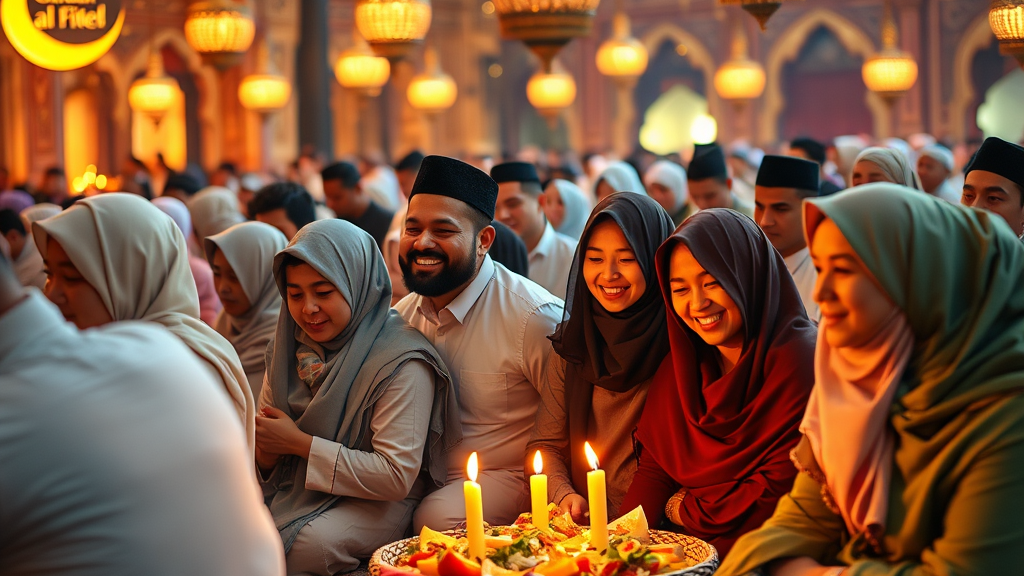
Eid al-Fitr and Eid al-Adha are two major Islamic festivals that hold a special place in the religious and cultural lives of Muslims. These occasions not only reflect religious beliefs but also foster brotherhood, love, and unity among Muslims. This article delves into the significance of both Eid celebrations and their religious and social aspects.
The Importance of Eid al-Fitr
Eid al-Fitr is celebrated at the end of the holy month of Ramadan. It is a joyous festival marking the culmination of a month of fasting, worship, and sacrifice.
Religious Importance:
- Gratitude: Eid al-Fitr provides an opportunity to express gratitude to Allah for granting Muslims the strength to observe Ramadan.
- Zakat al-Fitr: The celebration begins with the payment of Zakat al-Fitr, a form of charity aimed at including the less fortunate in the festivities.
- Worship: The day of Eid starts with a special congregational prayer, highlighting the greatness and blessings of Allah.
Social Importance:
- Happiness and Joy: Eid al-Fitr is a time to share happiness and spend quality time with family and friends.
- Brotherhood: On this day, Muslims greet one another warmly, exchange gifts, and strengthen bonds of brotherhood and unity.
The Importance of Eid al-Adha
Eid al-Adha is celebrated at the conclusion of the Hajj pilgrimage and commemorates the sacrifice of Prophet Ibrahim (AS). On this day, Muslims perform Qurbani (animal sacrifice) as an act of obedience to Allah.
Religious Importance:
- Sacrifice: The ritual of Qurbani symbolizes devotion to Allah and reflects the spirit of sacrifice demonstrated by Prophet Ibrahim (AS).
- Piety: The primary goal of Qurbani is to attain piety and closeness to Allah, as stated in the Quran: “It is neither their meat nor their blood that reaches Allah, but it is piety from you that reaches Him” (Surah Al-Hajj: 37).
- Collective Worship: Muslims gather to perform the special Eid prayer, showcasing unity and solidarity.
Social Importance:
- Helping the Needy: The meat from the sacrifice is distributed in three parts—one for the family, one for relatives, and one for the needy. This ensures that everyone can partake in the celebration.
- Strengthening Bonds: Eid al-Adha brings families and communities together, fostering love and connection.
Common Aspects of Both Eids
- Spiritual Growth: Both Eids provide an opportunity for Muslims to strengthen their relationship with Allah and grow spiritually.
- Social Harmony: These festivals bring Muslims together, promoting unity, love, and compassion.
- Lesson of Brotherhood: On both occasions, there is a strong emphasis on helping the less fortunate and sharing the joys of life.
Conclusion
Eid al-Fitr and Eid al-Adha are not merely religious observances but also serve as vital opportunities to nurture social harmony, love, and generosity. They remind Muslims to lead lives aligned with the principles of Islam while contributing to the well-being of their communities. By observing these festivals, Muslims can create a society based on mutual respect, kindness, and peace.
 Al Quran